Subscribe Donate

Topics

8 forms of capital active hope adaptation agroecology agroforestry alder buckthorn Amazon anxiety apples arable art arthritis austrian scythe UK autumn Autumn equinox award back garden back yard Be The Earth beans Bec Hellouin beech tree bees beneficial berries biochar biodigester biodiversity biodynamics blackberries blackthorn book review brain brassica cage budget build building campesino capital card deck celebrate Celtic festivals change changes chemical-free chickens christmas circular city farm clay pot clean air cleansers cleansing milks cleavers climate change climate chaos climate collapse climate emergency climate grief climate solutions climbers climbing cob comfrey communities community Community Nature Network community projects compost compost teas composting conference connection consciousness conservation container cooking coppice coppicing cordial cosmology courgettes crafts creativity crisis crop diversity crop protection Cross Quarter Festival cultural emergence culture cut flowers cycles dandelion degraded design diary diversity DIY do it yourself Donella Meadows drought dryland earth care earth's cycles Earth's energy earths cycles ecoculture ecological emergency economics ecopoetry ecosystem ecosystem restoration ecosystem restoration camps ecosystems edges edible edible flowers education efficiency elder elderflowers elements elixir emergence endangered birds energy equinox Ethical Consumer ethics face mask fair shares Fairtrade farming farms feedback feminine ferns festivals figs film firewood floristry flower essence flower garden flowers food food forest food garden footbath forage foraging forest garden forest gardening forests fruit fruit leather fruit trees full moon funding fungi future future care gardening gardens garlic garlic mustard gift economy gin Give Nature a voice Glennie Kindred global poverty glut grapes grassroots green space greenhouse greens grief groundcover grow grow food grow your own growing growing food guilds habitat habits handcream harvest harvests hawthorn hazel hazelnut healing shrubs healing trees health healthy soil heart health hedgerow hedgerows hedging herbal herbal remedies herbal teas herbalist herbs holistic holistic planned grazing home homeless homemade wine homestead hope Hugelkultur humanure hummus hungry gap IBC tanks Idler Imbolc incense increase yields Indigenous indigenous knowledge indoor inexpensive influence inspiration International Womens Day jam keyline kingfisher kitchen garden lacto-fermentation Lammas land land restoration landscape landscapes leaf mould leverage points life lifestyle limeflowers livelihood livestock living labs logs Looby Macnamara lotion low cost low-impact lunar Lush Cosmetics Lush Spring Prize macerations magazine Manda Scott Mangwende Orphan Care Trust Māori Maramataka market garden market gardening marmalade marshmallow mass heater meadow meadowsweet medicinal micro microbes microfarm microgreens Midwest Permaculture mimic mindset mini veg mitigation money moon phases Morag Gamble moringa Mother Earth movement mow mulch multifunctional mushrooms native plants natural natural building natural fertiliser natural skincare natural swimming pool nature nature connection nitrogen no dig no waste no-dig north-facing novel November nutrition nutritious nuts oak woodland observe oca October off-grid oil cleansing Open Shell Farm orchard orchards organic organic flowers organic gardening outdoor shower oven oxymel oyster pallets pasture-fed patterns peat-free people people care peoplecare perennials permaculture permaculture course permaculture design Permaculture Magazine permaculture magazine award permaculture projects permaculture week permaculutre permayouth pesto pests philippines pied flycatcher pine tree pips pizza oven plant profile plants politicians doing nothing pollinators pollution polyculture polycultures positive change preserving principles prize projects propagating protection pruning prunings psycho-spiritual awareness psychospiritual transformation rainforest rainwater raspberries re-green recipe recipes Red List reduce reed beds regeneration regenerative regenerative agriculture regenerative farming regenerative projects relative location relative matter remedy renewable renewable energy resilient resources restoration reuse revolution rhythms rootstock rootstocks roundhouse roundwood runner beans Rupert Read sage Sahel salad salads salve Samhain Savitri Trust schools Scotland scotts pine scythe scything seasonal seasons seeds selfcare Sepp Holzer september septic tanks sewage treatment shade shamanism sheet mulching shrubs silvoculture silvopasture skincare sloes slugs small solutions small-scale smallholding social justice soil health solar solstice solutions sowing spiritual spring spring tonic squash stacking functions stock-free straw straw bale summer support sustainable Swayyam Sweet Bay sweet corn Swift Street swifts syntropic systems temperate terraces thistles thrutopia timber timber framing tincture tonic toolkit tools transformation Transformative Adaptation trees upcycle urban urban farm urban gardening veg garden vegan veganic verges vermicomposting vinegar visionaries walnuts waste water water cleansing watering weeds wellbeing wetland wild edges wild flowers wild food wild garlic wildflower wildlife win wine recipes wings winter winter greens winter salads winter solstice wisdom wood stove woodburner woodland woodland management woodlands world is possible worms yarrow year round year-round food yield young people youth zai zai pits zone 00 zoning

Topics

8 forms of capital active hope adaptation agroecology agroforestry alder buckthorn Amazon anxiety apples arable art arthritis austrian scythe UK autumn Autumn equinox award back garden back yard Be The Earth beans Bec Hellouin beech tree bees beneficial berries biochar biodigester biodiversity biodynamics blackberries blackthorn book review brain brassica cage budget build building campesino capital card deck celebrate Celtic festivals change changes chemical-free chickens christmas circular city farm clay pot clean air cleansers cleansing milks cleavers climate change climate chaos climate collapse climate emergency climate grief climate solutions climbers climbing cob comfrey communities community Community Nature Network community projects compost compost teas composting conference connection consciousness conservation container cooking coppice coppicing cordial cosmology courgettes crafts creativity crisis crop diversity crop protection Cross Quarter Festival cultural emergence culture cut flowers cycles dandelion degraded design diary diversity DIY do it yourself Donella Meadows drought dryland earth care earth's cycles Earth's energy earths cycles ecoculture ecological emergency economics ecopoetry ecosystem ecosystem restoration ecosystem restoration camps ecosystems edges edible edible flowers education efficiency elder elderflowers elements elixir emergence endangered birds energy equinox Ethical Consumer ethics face mask fair shares Fairtrade farming farms feedback feminine ferns festivals figs film firewood floristry flower essence flower garden flowers food food forest food garden footbath forage foraging forest garden forest gardening forests fruit fruit leather fruit trees full moon funding fungi future future care gardening gardens garlic garlic mustard gift economy gin Give Nature a voice Glennie Kindred global poverty glut grapes grassroots green space greenhouse greens grief groundcover grow grow food grow your own growing growing food guilds habitat habits handcream harvest harvests hawthorn hazel hazelnut healing shrubs healing trees health healthy soil heart health hedgerow hedgerows hedging herbal herbal remedies herbal teas herbalist herbs holistic holistic planned grazing home homeless homemade wine homestead hope Hugelkultur humanure hummus hungry gap IBC tanks Idler Imbolc incense increase yields Indigenous indigenous knowledge indoor inexpensive influence inspiration International Womens Day jam keyline kingfisher kitchen garden lacto-fermentation Lammas land land restoration landscape landscapes leaf mould leverage points life lifestyle limeflowers livelihood livestock living labs logs Looby Macnamara lotion low cost low-impact lunar Lush Cosmetics Lush Spring Prize macerations magazine Manda Scott Mangwende Orphan Care Trust Māori Maramataka market garden market gardening marmalade marshmallow mass heater meadow meadowsweet medicinal micro microbes microfarm microgreens Midwest Permaculture mimic mindset mini veg mitigation money moon phases Morag Gamble moringa Mother Earth movement mow mulch multifunctional mushrooms native plants natural natural building natural fertiliser natural skincare natural swimming pool nature nature connection nitrogen no dig no waste no-dig north-facing novel November nutrition nutritious nuts oak woodland observe oca October off-grid oil cleansing Open Shell Farm orchard orchards organic organic flowers organic gardening outdoor shower oven oxymel oyster pallets pasture-fed patterns peat-free people people care peoplecare perennials permaculture permaculture course permaculture design Permaculture Magazine permaculture magazine award permaculture projects permaculture week permaculutre permayouth pesto pests philippines pied flycatcher pine tree pips pizza oven plant profile plants politicians doing nothing pollinators pollution polyculture polycultures positive change preserving principles prize projects propagating protection pruning prunings psycho-spiritual awareness psychospiritual transformation rainforest rainwater raspberries re-green recipe recipes Red List reduce reed beds regeneration regenerative regenerative agriculture regenerative farming regenerative projects relative location relative matter remedy renewable renewable energy resilient resources restoration reuse revolution rhythms rootstock rootstocks roundhouse roundwood runner beans Rupert Read sage Sahel salad salads salve Samhain Savitri Trust schools Scotland scotts pine scythe scything seasonal seasons seeds selfcare Sepp Holzer september septic tanks sewage treatment shade shamanism sheet mulching shrubs silvoculture silvopasture skincare sloes slugs small solutions small-scale smallholding social justice soil health solar solstice solutions sowing spiritual spring spring tonic squash stacking functions stock-free straw straw bale summer support sustainable Swayyam Sweet Bay sweet corn Swift Street swifts syntropic systems temperate terraces thistles thrutopia timber timber framing tincture tonic toolkit tools transformation Transformative Adaptation trees upcycle urban urban farm urban gardening veg garden vegan veganic verges vermicomposting vinegar visionaries walnuts waste water water cleansing watering weeds wellbeing wetland wild edges wild flowers wild food wild garlic wildflower wildlife win wine recipes wings winter winter greens winter salads winter solstice wisdom wood stove woodburner woodland woodland management woodlands world is possible worms yarrow year round year-round food yield young people youth zai zai pits zone 00 zoning

Spring Herbal Vinegars

Spring leaves are packed with nutritious minerals. The Seed SistAs share how to extract these using herbal vinegars.

In spring we celebrate the dawn of life in the cycle of the year. Fresh, green leaves emerge to offer nourishment and the promise of new life. Outside are the gifts of lush, green, mineral-rich leaves decorating the earth and offering a plentiful herbal harvest.

The Earth is emerging from the dark winter months, witnessing the re-emergence of the sunshine and light as we approach the point in the year when day and night are equal, the Spring Equinox. Feelings of hope and excitement and a rise in energy can be felt at this time. Generally, people are happier and more excitable during the spring months – we have a spring in our step – mirroring the new growth that’s occurring in Nature.

The energy of the new growth spring leaf is full of vitality. The verdant, fertile earth once again becomes clothed in wonderful green vegetation. We start to feel enlivened.

The new growth leaves are particularly useful for the cleansing needed in the spring months. They contain all of the bursting fresh energy of life, filled with minerals and various phytonutrients. Leaves picked at this time are rich with medicine for the lymph, urinary system and for remineralising, cleansing and strengthening the body.

Superfood greens

So called superfoods have flooded the market place with exotic grains and fruits selling for high profits. Superfood is a market­ing term for food with supposed health benefits as a result of some part of its nutritional analysis or its overall nutrient den­sity. Leafy spring greens are about as nutrient dense as you can find, packed with the molecule chlorophyll. They have the added benefits of being in your gardens and parks: no air miles used to get to you! They are free and offer a chance to get outside with friends and family and get creative with Mother Nature’s bounty.

Chlorophyll is the pigment which gives plants their green colour and is found in most plants and algae. Chlorophyll facilitates the process of photosynthesis, allowing energy creation from the absorption of light. Chloro­phyll is green because it absorbs all the colours in the light spectrum except green which it reflects. The chlorophyll molecule closely resembles haem, the pigment that combines with protein to form haemoglobin in human blood. Haemoglobin is present in the blood cells and carries oxygen to the tissues making the production of energy and life possible. When chlorophyll is consumed it increases oxygen transportation within the body thus aiding optimum health and vitality.

Herbal vinegar

Vinegar, from the French vin aigre, meaning ‘sour wine’, can be made from almost any fermentable carbohydrate source, including wine, apples, pears, grapes, berries, maple syrup, potatoes and malt, amongst others. We use apple cider vinegar to preserve and extract our herbal nutrients.

Raw apple cider vinegar has been shown to have many healthful positive qualities including:

  • Balances high cholesterol
  • Improves digestion
  • Supports hair and skin health
  • Reduces fatigue
  • Counters osteoporosis
  • Improves metabolic functioning
  • Moderates high blood pressure.

The use of vinegar to promote immu­nity, fight infections and to treat other acute conditions dates back to Hippo­crates (460-377 BCE, the father of modern medicine), who recommended vinegar preparations for a host of ail­ments including internally for respira­tory conditions and externally for cleaning ulcerations and for the treatment of sores.

Preserving fresh green herbs in vinegar is an easy way to capture their nourishing goodness. Apple cider vinegar has been used as a health-giving agent for centuries and is an exceptionally good medium for extracting these valuable minerals from the lush green spring leaves. There are many healing powers of vinegar. It helps lower cholesterol, improve skin tone, moderate high blood pressure, prevent or counter osteoporosis and improve metabolic functioning. Herbs and vinegar make a superb combination: the healing and nutritional properties of vinegar married to the aromatic and health-protecting effects of the herbs.

After winter’s lack of light and the more sedentary inclination we feel during colder months, we can be depleted of essential vitamins and minerals. As the winter months draw to a close, a spring vinegar can capture the minerals that are abundant in virulent new sprouting spring leaves. Making your vinegar at this time of year marks the start of new endeavours and renewed enthusiasm as spring gets underway.

Using your herbal vinegar

Try a tablespoon of herbal vinegar in a drink of warm water every morning to start the day hydrated with a mineral supplement; you can add molasses to sweeten the drink and give you added iron. You can pour your vinegar over beans or grains, add to oil and mustard to make a delicious salad dressing or use it straight to season stir fries and soups. Regular use boosts the nutrient-level of any diet with very little effort and it offers you an easy way to keep your calcium and mineral levels at an optimum.

Preventing osteoporosis

Osteoporosis, meaning porous bone, is a common disease (it occurs in 1 in 3 women and 1 in 5 men) in which the density and quality of bone are reduced. As bones become more porous and fragile, the risk of fracture is greatly increased. The loss of bone occurs silently and progressively. Often there are no symptoms until the first fracture occurs. Our bones are living tissue and con­stantly changing. From the moment of birth until young adulthood, bones are developing and strengthening. Our bones are at their peak bone mass or most dense in our early 20s. As we age some of our bone cells begin to dissolve bone matrix (resorption), while new bone cells deposit osteoid (formation). This process is known as remodelling. For people with osteoporosis, bone loss outpaces the growth of new bone. Bones become porous, brittle and prone to fracture.

By ensuring a nutritious diet with plenty of minerals and adequate calcium we can go a long way to preventing osteoporosis.

Adding vinegar to your food helps to build bones because it makes the minerals from the vegetables you eat more readily available for your body to metabolise. A spoonful of vinegar on your broccoli, kale or dandelion greens increases the calcium you get from these vegetables. Taking two tablespoons daily is a therapeutic dose.

Spring herbal vinegar recipe

You will need:
A clean jam jar
Foraged spring greens
Organic apple cider vinegar
A label

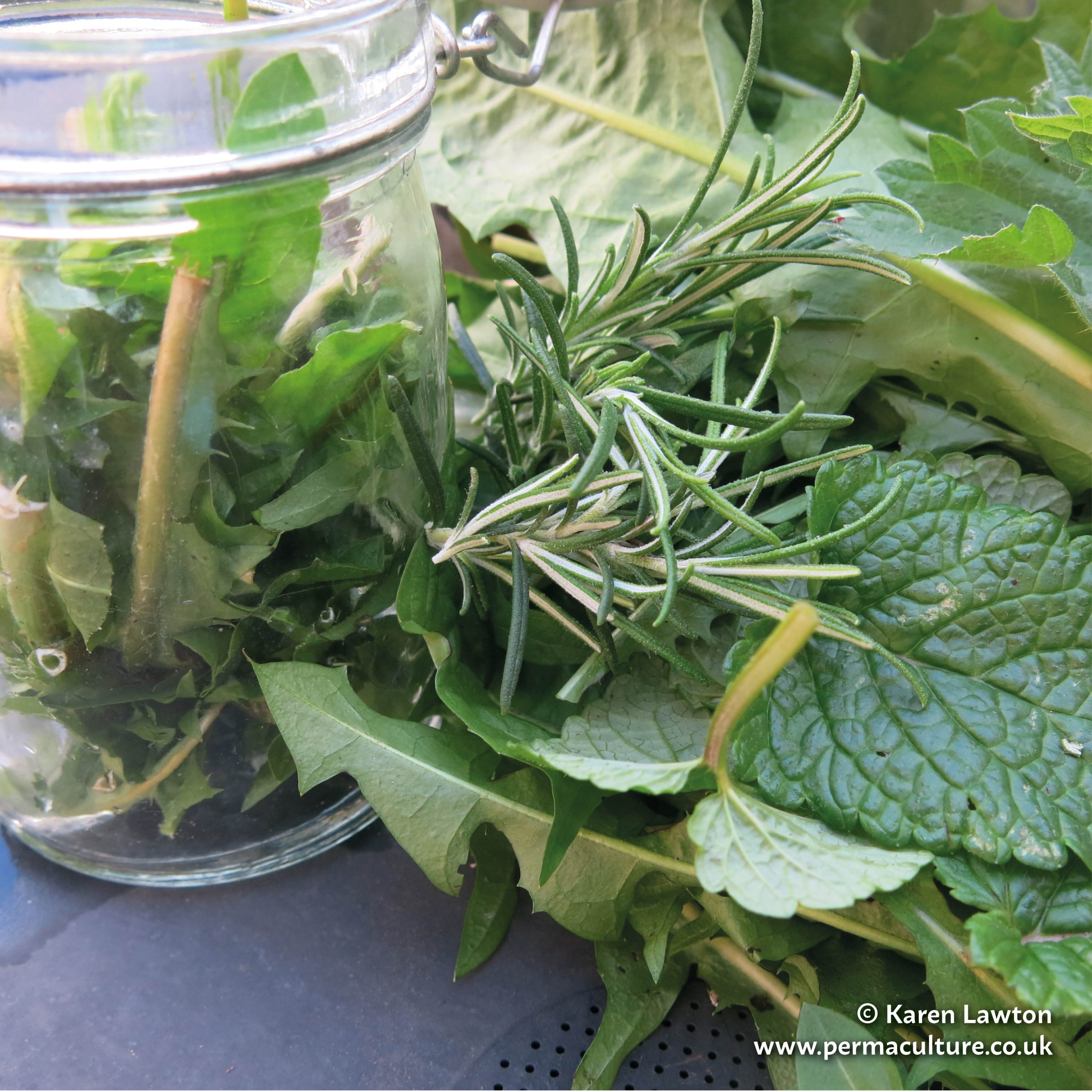
Method: Firstly harvest your lush, mineral rich, spring greens; dandelion leaves (Taraxacum officinale), cleavers (Galium aparine) and nettle (Urtica spp.) are great ones to start with. Dandelion leaves are a wonderful kidney support as a potassium-rich diuretic. Cleavers, also known as ‘sticky willy’ and ‘goose-grass’, is a celebrated lymphatic cleanser. Nettle tips are a rich source of iron and also have anti-histamine properties; great as a preventative before the hayfever season gets underway.

You can add many other greens as long as you are familiar with the plants and confident with identifying them. You might want to add ramsons/wild garlic (Allium ursinum), ground ivy (Glechoma hederacea) or garlic mustard (Alliaria petiolata) which all have wonderful aromatic flavour as well as being super nutrient dense. Next chop the leaves finely and fill a jar that has a plastic lid (metal lids can be corroded by the acidic vinegar). Cover the leaves with your vinegar and leave for two weeks before straining, bottling and labelling (put on the date, and where harvested from as well as what is in it).

Karen Lawton, Fiona Heckels and Belle Benfield are the Seed SistAs, three sensory herbalists who have a passion for educating others about plant medicine. Their mission is to connect people with their local plants promoting empowerment, autonomy, freedom and diversity in health care.

Karen and Fiona are medically trained herbalists who met at university and have worked together ever since. They combine their clinical experience with ritual, art and creativity to teach herbal medicine in a unique, inspiring and accessible style, led by the plants themselves. https://seedsistas.co.uk

Each issue of Permaculture magazine offers tried-and-tested solutions, projects and pioneering ideas from the very best of the permaculture community. Every subscription comes with FREE access to all 30+ years of back issues.